

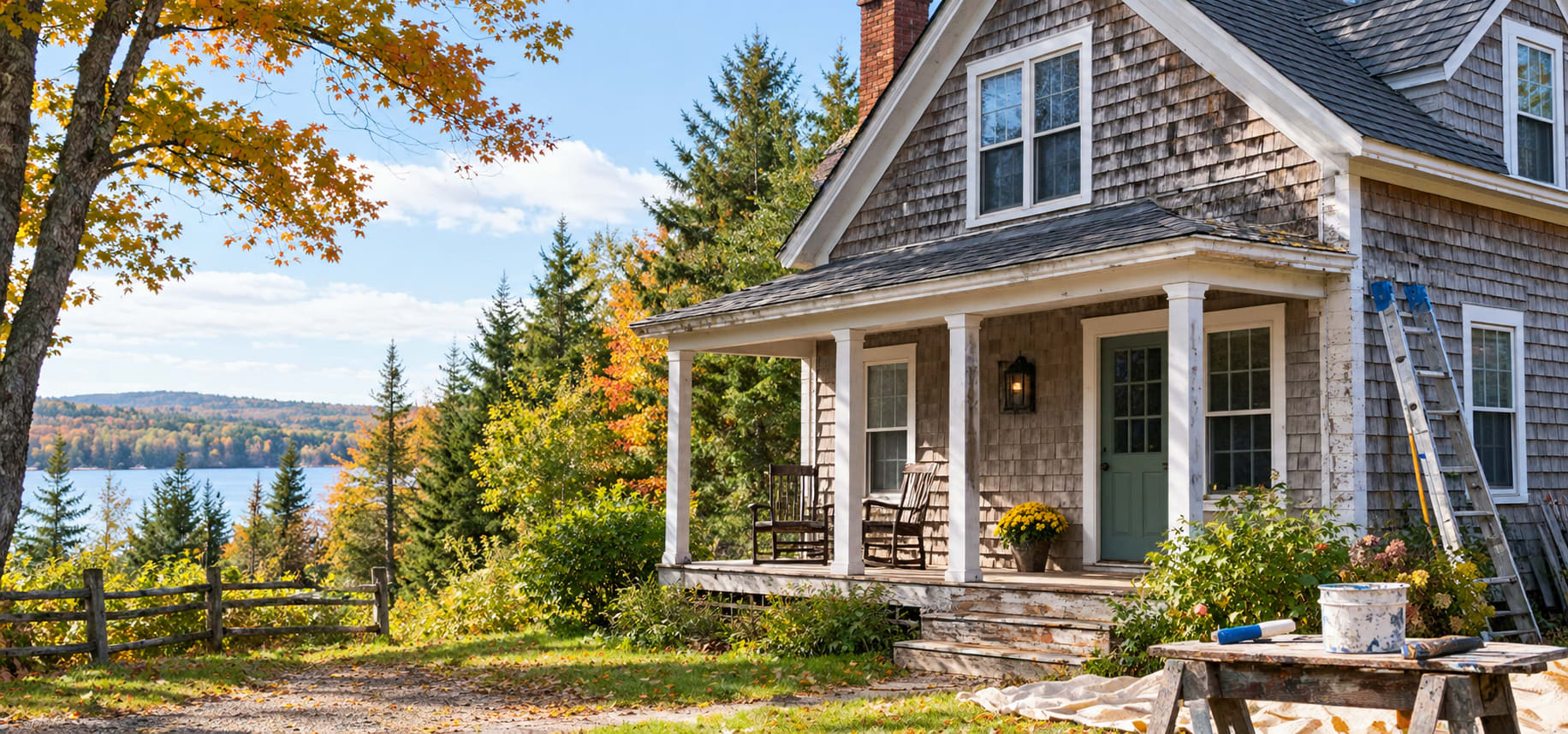
Not Sure What to Fix Before Selling?
Before You Spend $30,000–$50,000 Fixing Your Maine Home, Let's Talk.
If you're thinking about selling your home, it's easy to look around and see a long list of things that could be improved. Maybe the kitchen is dated, the floors have seen better days, the windows are old, or you've been putting off repairs for years.
But before you start hiring contractors and spending thousands of dollars, there's a more important question:
Will those improvements actually increase your selling price enough to make the investment worthwhile?
Sometimes the answer is yes. Other times, homeowners spend tens of thousands of dollars preparing a property for sale only to discover that buyers weren't willing to pay enough more to justify the expense.
Every property is different. The right decision can depend on your home's condition, location, price range, likely buyers and the current Maine real estate market.
Before you renovate it, replace it or rip it out, let's figure out whether it's actually worth doing.
Repairs That May Be Worth Making Before You Sell
Not every improvement needs to be expensive. In many cases, the best return comes from taking care of the things that make buyers wonder what else might be wrong with the property.
Cleaning, decluttering and basic maintenance can make a surprisingly big difference. Fresh paint where it's needed, fixing dripping faucets, replacing broken fixtures, repairing damaged trim and taking care of obvious deferred maintenance can help a home feel better cared for without requiring a major investment.
Curb appeal matters too. Cleaning up the yard, trimming overgrown vegetation, pressure washing where appropriate and making the entrance inviting can improve a buyer's first impression before they ever walk through the door.
Bigger issues require more thought. An aging roof, questionable heating system, septic problem, damaged siding or other significant defect may affect what buyers are willing to pay — or even whether certain buyers can finance the property.
But that still doesn't automatically mean you should replace everything before selling.
The goal isn't to make your home perfect. It's to spend money where it has the best chance of helping you sell.
Repairs That May NOT Pay You Back
It's easy to assume that the more money you put into your home before selling, the more money you'll get back. Unfortunately, real estate doesn't always work that way.
A major kitchen or bathroom remodel may make your home look beautiful, but spending $30,000 or $40,000 doesn't necessarily mean buyers will pay $30,000 or $40,000 more for the property. You may also be choosing finishes based on your taste when the next owner would have preferred something completely different.
Replacing things simply because they're old can also be questionable. Older windows, flooring, cabinets or appliances aren't automatically a reason to replace them if they're functional and appropriate for the property. Sometimes cleaning, repairing or simply pricing the home accordingly makes more financial sense.
Be especially careful about over-improving a property for its location or price range. There's usually a limit to what buyers will pay for a particular home in a particular market, regardless of how much you've invested in improvements.
And don't assume every cosmetic imperfection needs to disappear. Buyers expect an older Maine home to have some character and wear. Trying to make every room, floor and piece of trim look brand-new can consume a lot of money without substantially changing the eventual selling price.
Sometimes the better strategy is to let the next owner make the improvements they want — and price and market the property accordingly.
What About Older Maine Homes, Camps & Rural Properties?
Maine properties can come with their own set of considerations. An older farmhouse, seasonal camp or rural home may have features that would be unusual somewhere else but aren't necessarily unusual here.
Private wells and septic systems, wood or oil heat, older electrical systems, private roads, seasonal access, outbuildings and acreage can all affect how buyers look at a property. The important question isn't always whether something is new — it's whether it's functional, safe, financeable and appropriate for the property.
A seasonal Maine camp is a good example. Spending thousands of dollars trying to turn a simple camp into something that feels like a year-round home may not make sense if the buyers attracted to that property are specifically looking for an affordable recreational getaway.
The same can be true with an older rural home. Buyers looking for acreage, privacy and character may be willing to accept dated kitchens, older finishes or projects that would concern a buyer looking for a completely updated home.
On the other hand, certain issues can significantly reduce the number of buyers who can purchase a property. Problems involving the septic system, water supply, roof, heating, electrical system, structural condition or year-round access may affect financing, insurance or a buyer's willingness to move forward.
That's why I wouldn't automatically recommend fixing everything — or automatically recommend selling everything as-is. The right strategy depends on the property and the buyers we're likely to attract.
Should You Sell Your Maine Home As-Is?
Selling a home as-is doesn't necessarily mean there's something seriously wrong with it. It can simply mean that the seller doesn't want to spend the time or money making improvements before putting the property on the market.
For some sellers, that can be a perfectly reasonable strategy. You may be dealing with an inherited property, preparing for a move, handling an estate, selling a second home or camp, or simply deciding that you'd rather adjust the asking price than manage months of repairs and contractors.
The tradeoff is that condition can affect both the price buyers are willing to pay and the size of the buyer pool. Some properties will still attract plenty of interest as-is, while others may benefit from addressing a few specific issues before they hit the market.
The decision isn't really “fix everything or fix nothing.” Often, the best answer is somewhere in between.
Before You Fix It, Let Me Take a Look
If you're thinking about selling a Maine home, camp or property and aren't sure what you should repair first, you don't have to figure it out by yourself.
Before you hire contractors or start spending thousands of dollars, I'd be happy to take a look at the property and give you my opinion about which improvements may help it sell — and which ones may not be worth the expense.
We can talk about the property's current condition, what comparable properties are selling for, the buyers we're likely to attract and whether making certain repairs could realistically improve your selling price or marketability.
There's no obligation, and your house doesn't need to be cleaned up, repaired or “ready to sell” before you contact me. In fact, I'd rather see it before you start spending money.
If you decide to sell, your property will receive traditional MLS and real estate marketing along with exposure to more than 155,000 people through three Maine real estate Facebook groups that I own and manage.
Whether the right answer is to make a few strategic improvements, tackle a larger issue or simply sell the property in its current condition, we can figure that out before you start writing checks.
Thinking About Selling? Let's Talk Before You Start Fixing.
Ask Me What I'd Fix Before Selling
Not Sure If Now Is the Right Time to Sell?
Deciding what to fix is only part of the equation. If you're also wondering whether you should sell now or wait until next spring, read my guide: Should I Sell My Maine Home Now or Wait Until Spring 2027?